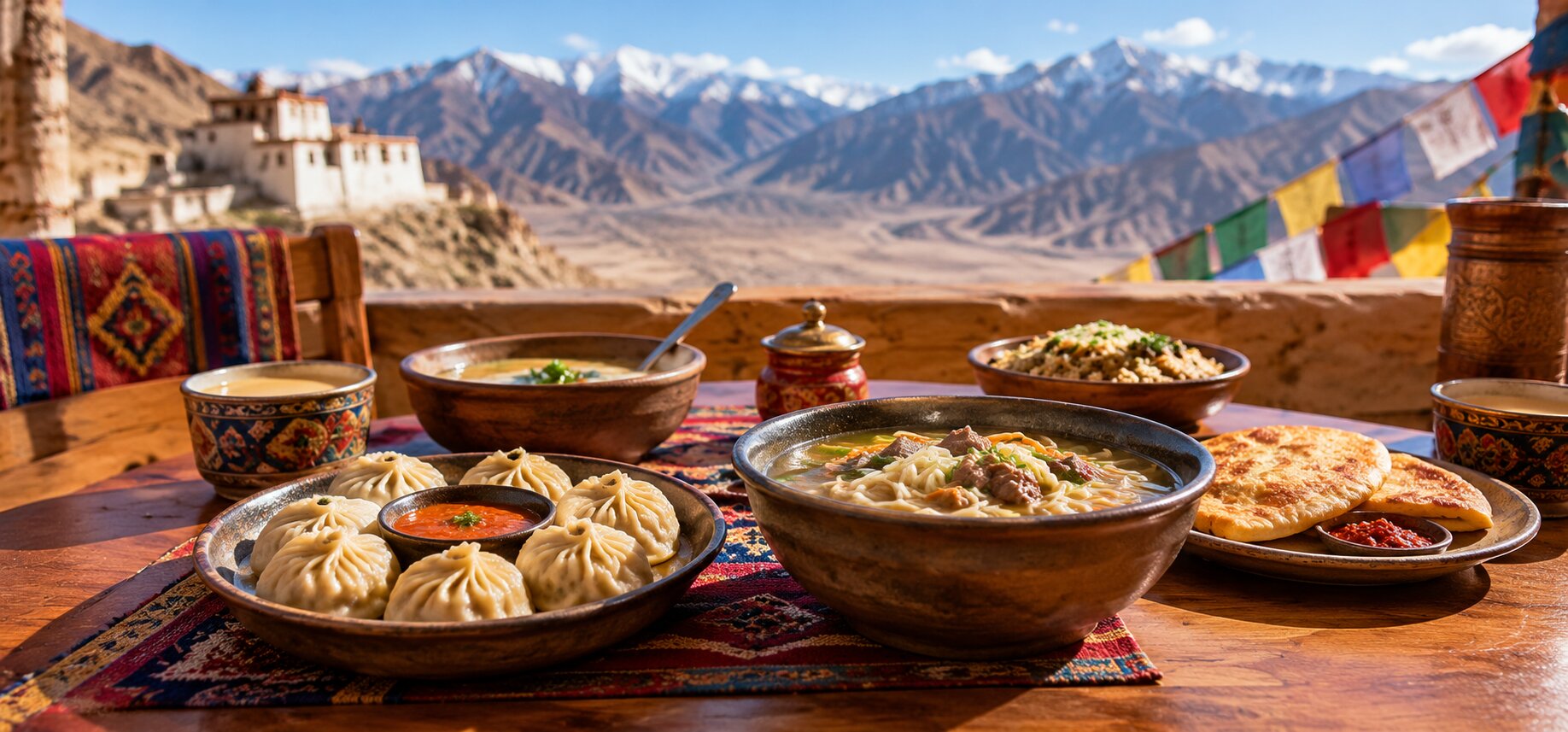

Ladakhi food has been in the news this month. On 5 October, dishes such as Za Thuk, a wild nettle soup, and Phaymer, a dessert of roasted barley, jaggery and butter, featured on the menu of a banquet at Rashtrapati Bhavan for Switzerland's president, as reported by BusinessToday and other outlets. If that made you curious about what Ladakhi food is actually like, this guide covers the dishes to try, what the cooking draws on, and where to taste Ladakhi flavours at The Grand Dragon Ladakh in Leh.
QUICK ANSWER:
Ladakhi food is a high-altitude cuisine shaped by Tibet and Central Asia, built around noodle soups, pasta stews, breads, barley and salted butter tea. In Leh, try thukpa, skyu, chutagi, khambir and gur gur chai. At The Grand Dragon Ladakh, Ladakhi flavours appear at Zasgyath, Tusrabs and RYU OKA, so ask which dishes are on today.
What Is Ladakhi Food?
Ladakhi food has much in common with Tibetan food, according to Wikipedia. Its most prominent dishes include thukpa, a noodle soup, and tsampa, roasted barley flour that Ladakhis call ngampe. Skyu and chutagi, two rich pasta-style soups, are counted as strictly Ladakhi. Skyu is made with root vegetables and meat, and chutagi with leafy greens and vegetables.
The hotel's director has described the cuisine to Outlook Traveller as shaped by Tibet and Central Asia, and centred on hot brews, soups and a variety of breads. That fits a region where winters are long and cold.
Which Ladakhi Dishes Should You Try?
Descriptions vary a little between guides, so treat these as a starting point and ask how each dish is prepared.
|
Dish |
What it is |
|
Thukpa |
A noodle soup, made with vegetables or meat in a warm broth. |
|
Thenthuk |
A soup with hand-torn pieces of dough, often with vegetables and sometimes meat. |
|
Skyu |
A rich stew with small pieces of pasta, traditionally with root vegetables and meat. |
|
Chutagi |
A wholewheat pasta soup, traditionally with leafy greens and vegetables. |
|
Momo |
Dumplings with a vegetable, meat or cheese filling, steamed or fried. |
|
Khambir |
A thick-crusted local bread, often eaten at breakfast with butter tea. |
|
Gur gur chai |
Salted tea churned with butter, traditionally yak butter, and often offered to guests. |
|
Tsampa (ngampe) |
Roasted barley flour, a staple of Ladakhi and Tibetan cooking. |
What Does Ladakhi Cooking Draw On?
The region's cold, high-altitude climate shapes what ends up on the plate. Barley and wheat are staples. Apricots, apples and walnuts grow in the river valleys, and apricot is especially well known, turned into jam, juice and syrup. Wild garlic flavours dishes, and stinging nettle goes into soup. Butter and cheese from yak milk are part of everyday cooking.
A list of ingredients highlighted on that October banquet menu read like a summary of the region: sea buckthorn, apricot, wild nettle, yak cheese and barley, according to IANS.
Where Can You Taste Ladakhi Flavours at The Grand Dragon Ladakh?
These details come from the hotel's own dining page and experiences page. Menus and hours can change, so confirm them when you book.
|
Where |
What the hotel says |
|
Zasgyath, all-day dining |
A lobby-level restaurant decorated with colourful traditional Ladakhi frescos, with a patio looking out on the Stok Kangri range. Its a la carte menu includes Ladakhi, European, Pan Asian and Indian dishes. |
|
Tusrabs, the private dining room |
An exclusive Ladakhi sit-down dinner served in a traditional Ladakhi-style setup, with hosts who share insights into the region's food, culture and traditions. A Wazwan, the Kashmiri wedding feast, is also offered here. |
|
RYU OKA, Pan-Asian dining |
Locally sourced ingredients such as apricot and sea buckthorn are woven into select creations. Open for lunch from 12:30 PM to 4 PM (last order 3:30 PM) and dinner from 7 PM to 11 PM (last order 10:30 PM). Reservations are recommended on +91 70510 88726. The page also mentions artisanal cocktails. |
|
Solja, the tea and coffee lounge |
TWG teas and coffees, with baked goods made with local ingredients, including sea buckthorn, Himalayan apple and apricot tarts. |
|
Bonfires, barbecues and picnics |
Bonfire evenings with barbecue grills on the lawns in summer and on the patio in winter, and pop-up picnics by a brook in summer or on a frozen river in winter. |
For more on one of these venues, read our post on RYU OKA and its Silk Route menu. The Silk Route also shaped Ladakhi cooking, which the Tusrabs dinner draws on in its telling of the region's food history.
How Do You Eat Your Way Through Ladakhi Food, Step by Step?
- Step 1: Ask what is Ladakhi on the menu. At Zasgyath, the a la carte menu lists Ladakhi dishes among its world cuisines. Menus change, so ask which Ladakhi dishes are available that day.
- Step 2: Start with a soup. Thukpa, thenthuk and skyu are all warm, soupy dishes, and a gentle way to begin if you have just arrived in Leh.
- Step 3: Add a bread. Khambir is the local bread. If it is on offer, pair it with a hot drink.
- Step 4: Try gur gur chai once. It is a salty, buttery tea, not a sweet one, so it surprises first-time drinkers. Order a small cup before you commit to a second.
- Step 5: Book the Ladakhi dinner for the full meal. If you want the whole experience, ask the hotel to arrange the Tusrabs dinner for your dates, and ask what it will include.
- Step 6: Save an evening for the bonfire. The hotel's barbecue and bonfire evenings give you a more relaxed, outdoor meal. Ask whether they are running on your dates, since the weather changes with the season.
What Should You Know About Eating at Altitude?
Leh sits at about 3,500 m, and the hotel's travel guidance is to eat light, high-carbohydrate meals, drink plenty of water, and avoid alcohol and smoking while you adjust. Check anything medical with your own doctor. Our guides to Leh in October and to why a spa matters at 11,562 feet cover the first days in Leh in more detail.
Frequently Asked Questions
1. What is Ladakhi food?
A high-altitude cuisine with much in common with Tibetan food, built around noodle soups, pasta stews, breads, barley and salted butter tea.
2. What should I try first in Leh?
Thukpa or skyu for a warm start, khambir with a hot drink, and gur gur chai at least once.
3. What is gur gur chai?
A salted tea churned with butter, traditionally yak butter, and often offered to guests in Ladakh.
4. Is Ladakhi food suitable for vegetarians?
Many dishes come in vegetable versions, such as thukpa, thenthuk and momos. Ask how each dish is prepared.
5. Does The Grand Dragon Ladakh serve Ladakhi food?
Its pages say Zasgyath's a la carte menu includes Ladakhi dishes and that Tusrabs offers a Ladakhi sit-down dinner. Ask which dishes are available on your dates.
6. Can I book a Ladakhi dinner at the hotel?
Tusrabs, the private dining room, offers an exclusive Ladakhi dinner. Contact the hotel to arrange it for your dates.
Hungry for Ladakhi Flavours? Book Directly with The Grand Dragon Ladakh serves Ladakhi dishes at Zasgyath and a sit-down Ladakhi dinner at Tusrabs, in the heart of Leh. If you're planning a trip and want to taste the region properly, the useful questions are which dishes are on offer and how to book Tusrabs on your dates. Contact The Grand Dragon Ladakh on +91 9622266301 or at reservation@thegranddragonladakh.com to ask both before you book.


